A family curriculum

Rooted in Season

Read the Bible with your children through the church year. Start with short stories, a song, and a prayer. Follow the story from Genesis to Revelation, then add longer readings and discussion as your children are ready.

"One generation shall commend your works to another, and shall declare your mighty acts."Psalm 145:4

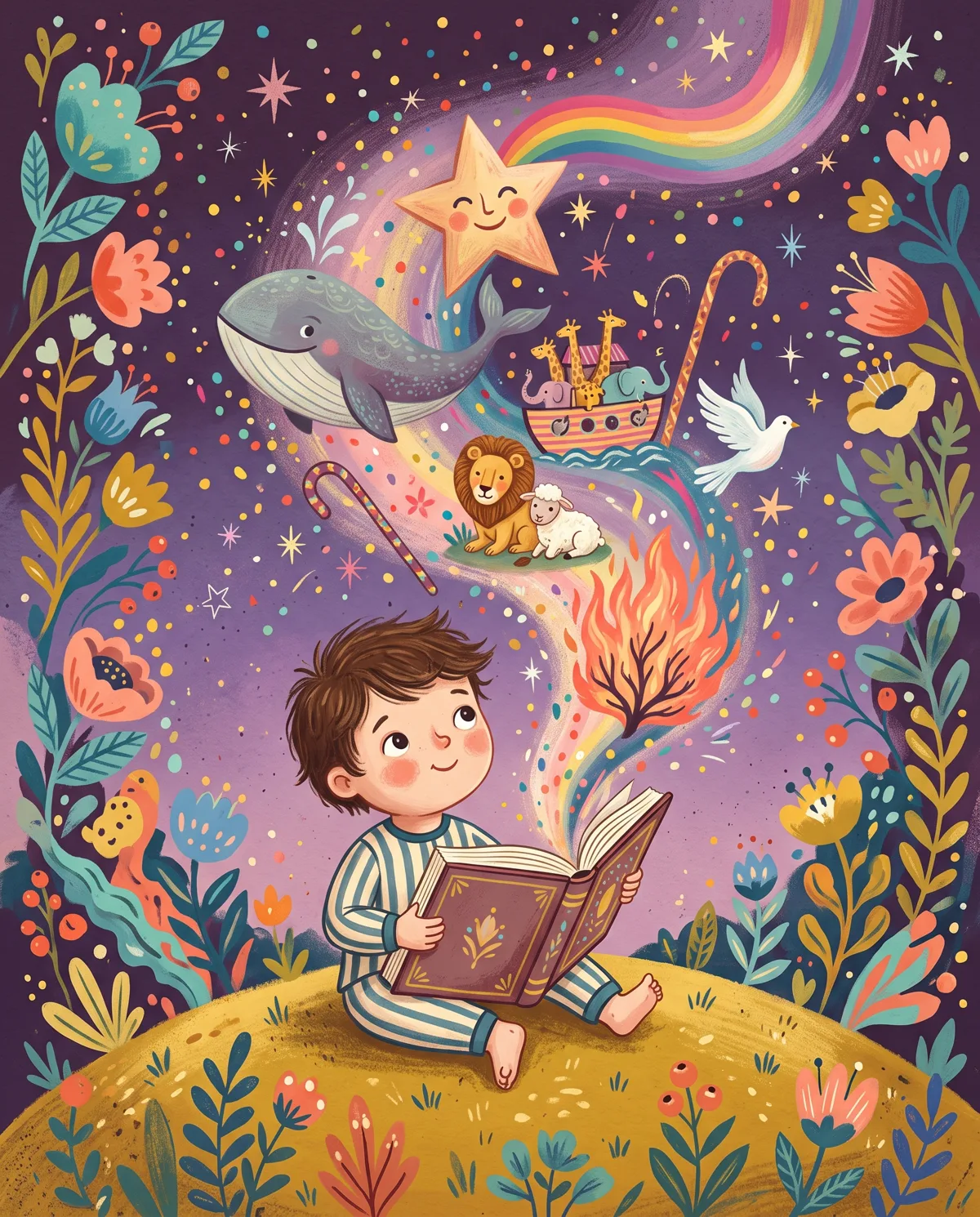
A small boy in striped pajamas sits on a hill at dusk with a giant open book, and the whole Bible pours out of it as a parade of whales, arks, stars and lambs.
Follow the golden thread
Foundations

Why build it this way

Deuteronomy 6:6 to 7 tells parents to speak about God's words during daily life. Choose a time you can keep, such as bedtime, a meal, or a walk. Read aloud and talk together.

Return to familiar stories. Pictures give children details to point to while they listen. A small study of preschoolers found differences in brain-network activity across audio, illustrated, and animated stories. It supports using illustrated read-alouds, but does not establish one reading method for every child.

James Fowler described early faith in terms of trust, images, stories, and the example of trusted adults. His framework informs the age bands here. Use those bands to plan what you read and discuss. They are guides, not fixed stages that every child reaches on schedule.

Sofia Cavalletti's Catechesis of the Good Shepherd and Jerome Berryman's Godly Play inform the use of simple story materials and open questions. Read the passage, let your child handle a relevant prop, and ask what they notice or wonder. Give them time to answer.
A note on Dr. Allen Tennison. The older bands draw on his teaching about reading difficult biblical passages in context and discussing work and calling. The source list below identifies the talks used in this plan.

The goal

The whole story, every year

Follow the Bible's main story from creation to the new creation each year. The younger bands use selected stories. Older bands work toward reading the full text. Alabaster Co.'s A Beautiful Year with Jesus, a 365-day devotional, is one reference for regular reading across a year.

The nine chapters below organize the readings around the church calendar. Advent introduces creation and God's promises. Christmas focuses on Jesus' birth. The following weeks cover Exodus and the kings. Lent and Holy Week follow Jesus' ministry and death. Easter covers his resurrection and the early church. After Pentecost, read about the church, the letters, and Revelation. Include Psalms and wisdom readings throughout the year.

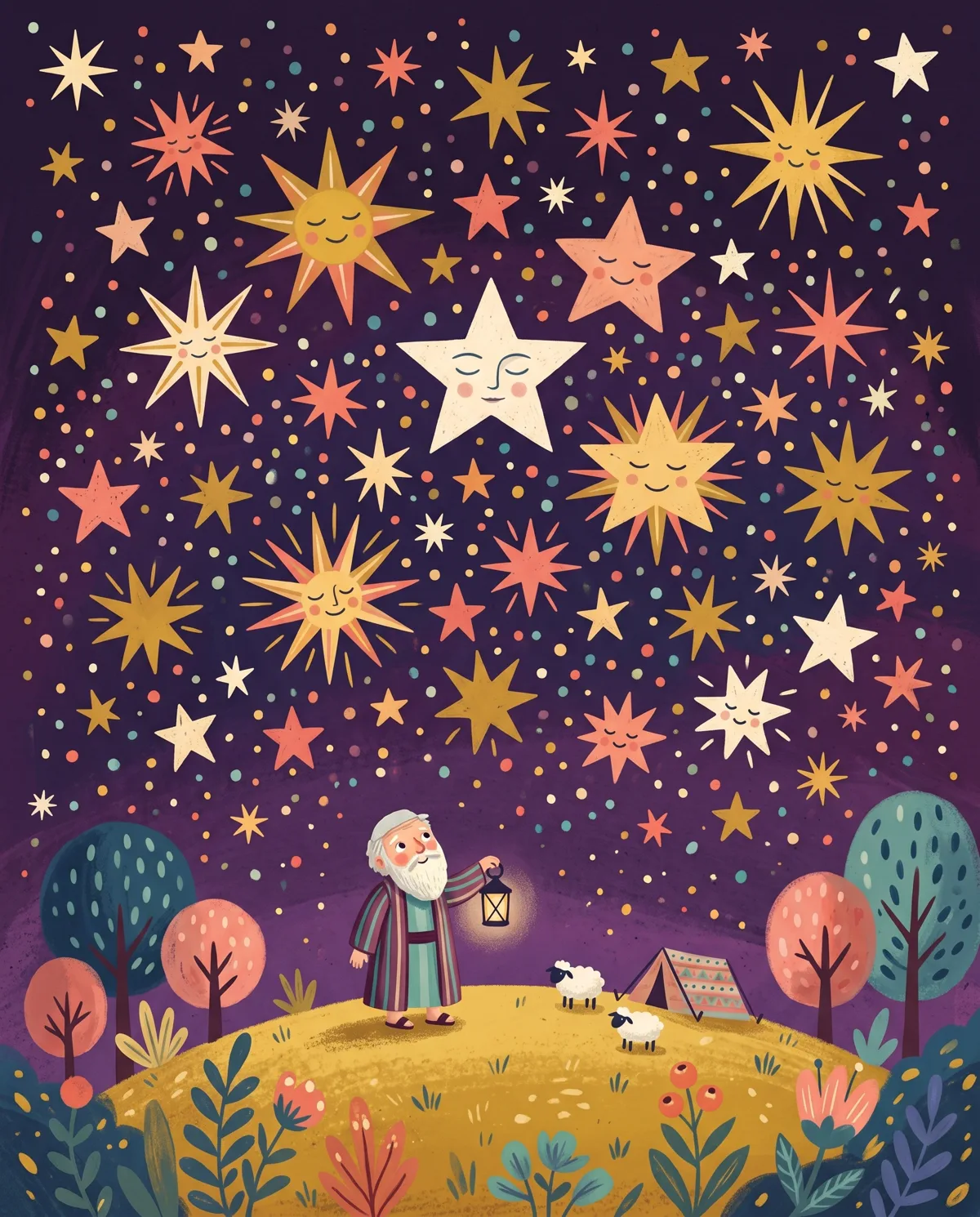
Abraham stands tiny on a hill with a lantern under a plum sky bursting with sleeping star faces.
Chapter one

Advent

4 weeks before Christmas

"The people walking in darkness have seen a great light." Isaiah 9:2

Covers: Creation, the Fall, the first promise of a rescuer, Abraham, and the prophets. Read these stories across the four weeks before Christmas.

A colossal sleeping star with striped rays hangs over a tiny glowing stable on a striped hill.
Chapter two

Christmastide

Dec 25 to Jan 5

"For unto you is born this day a Savior." Luke 2:11

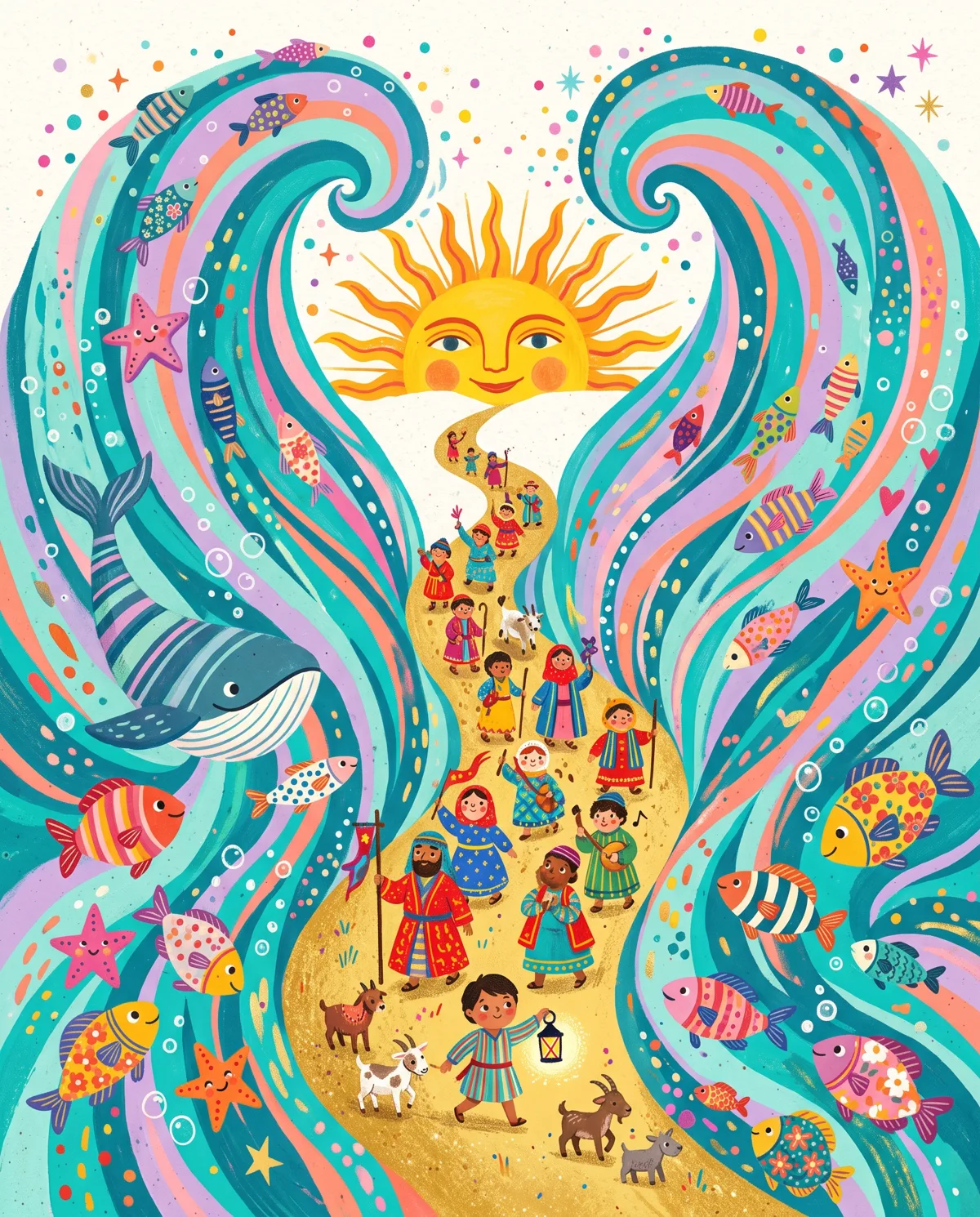
Covers: Jesus' birth in Luke 1 to 2 and Matthew 1 to 2. Return to the nativity readings throughout the twelve days.

A parade of tiny people walks a golden path between towering striped ribbon waves full of fish.
Chapter three

Epiphany & Ordinary Time

Jan 6 to mid-Feb

"The LORD will fight for you; you need only to be still." Exodus 14:14

Covers: Moses, the plagues, the crossing of the sea, and the covenant at Sinai. Trace how God rescues Israel in Exodus.

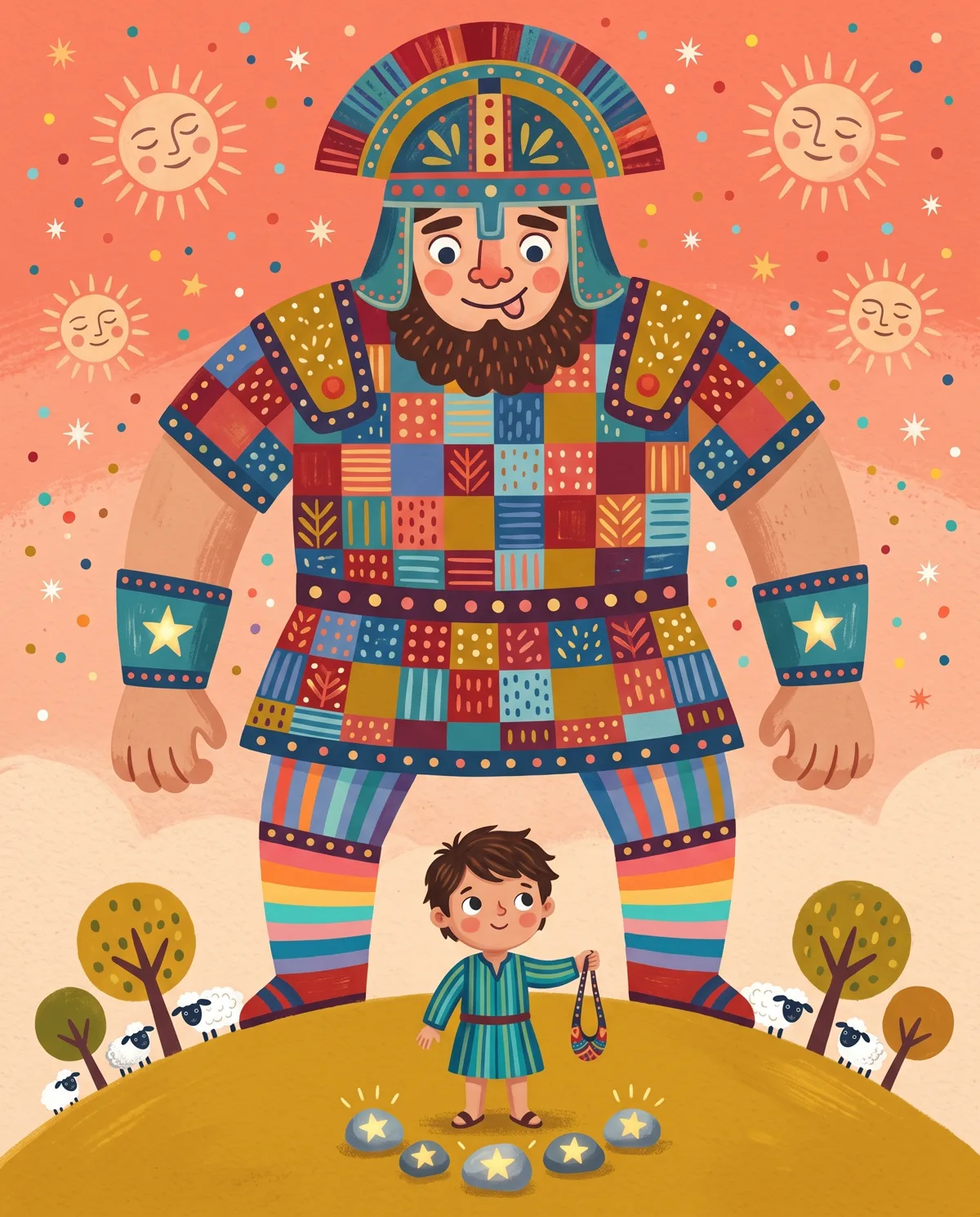
A small shepherd boy with a sling stands calmly beneath a giant patchwork-armored Goliath.
Chapter four

The Kings

Mid-Feb run-up to Lent

"The LORD looks on the heart." 1 Samuel 16:7

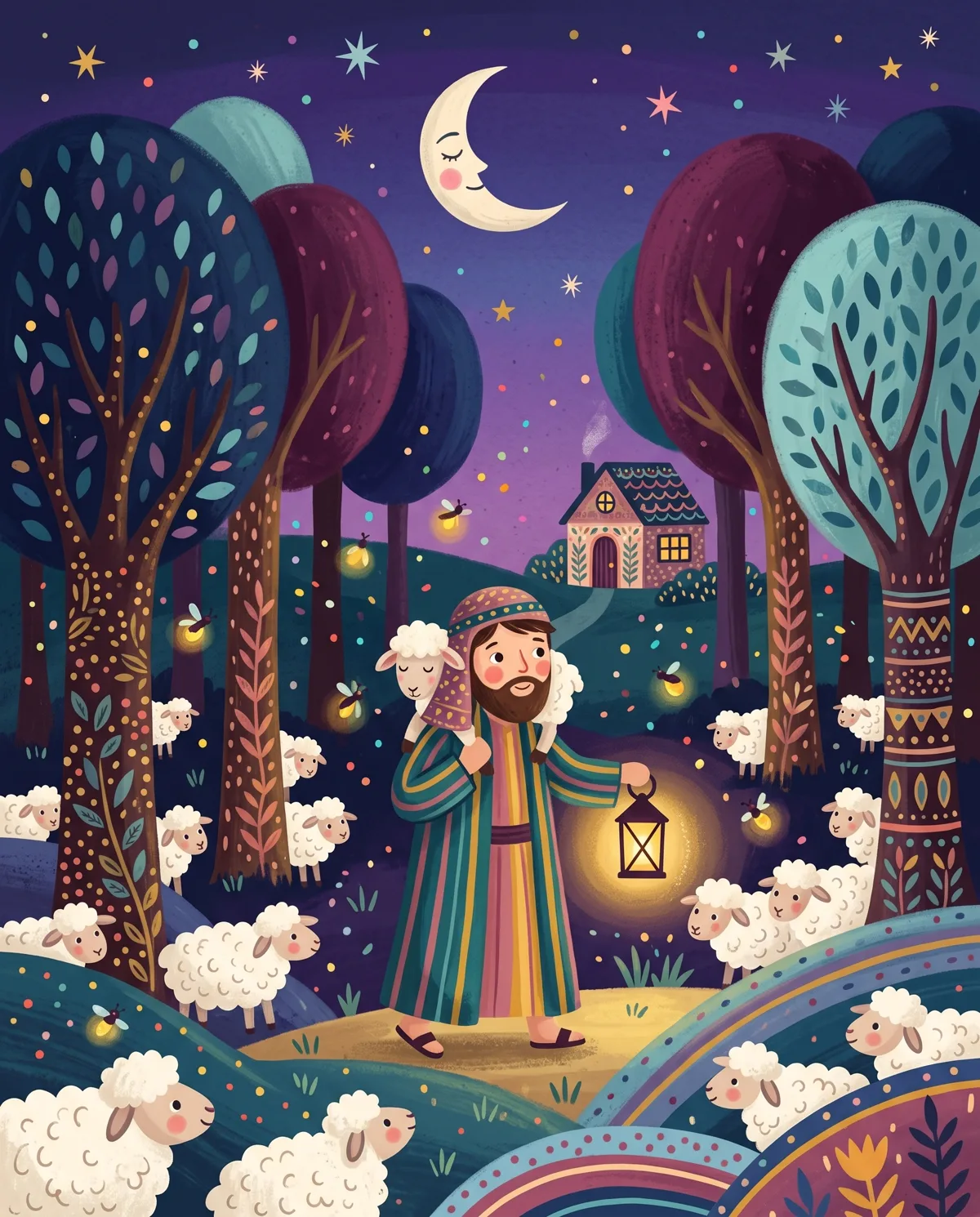
Covers: Judges, Ruth, Saul, David, and Solomon. Discuss the kings' choices and failures, and the promise of a king who will rule justly.

A shepherd carries a lamb on his shoulders through a dark forest of blob-trees, ninety-nine sheep peeking out.
Chapter five

Lent

Ash Wednesday to Palm Sunday

"He was pierced for our transgressions." Isaiah 53:5

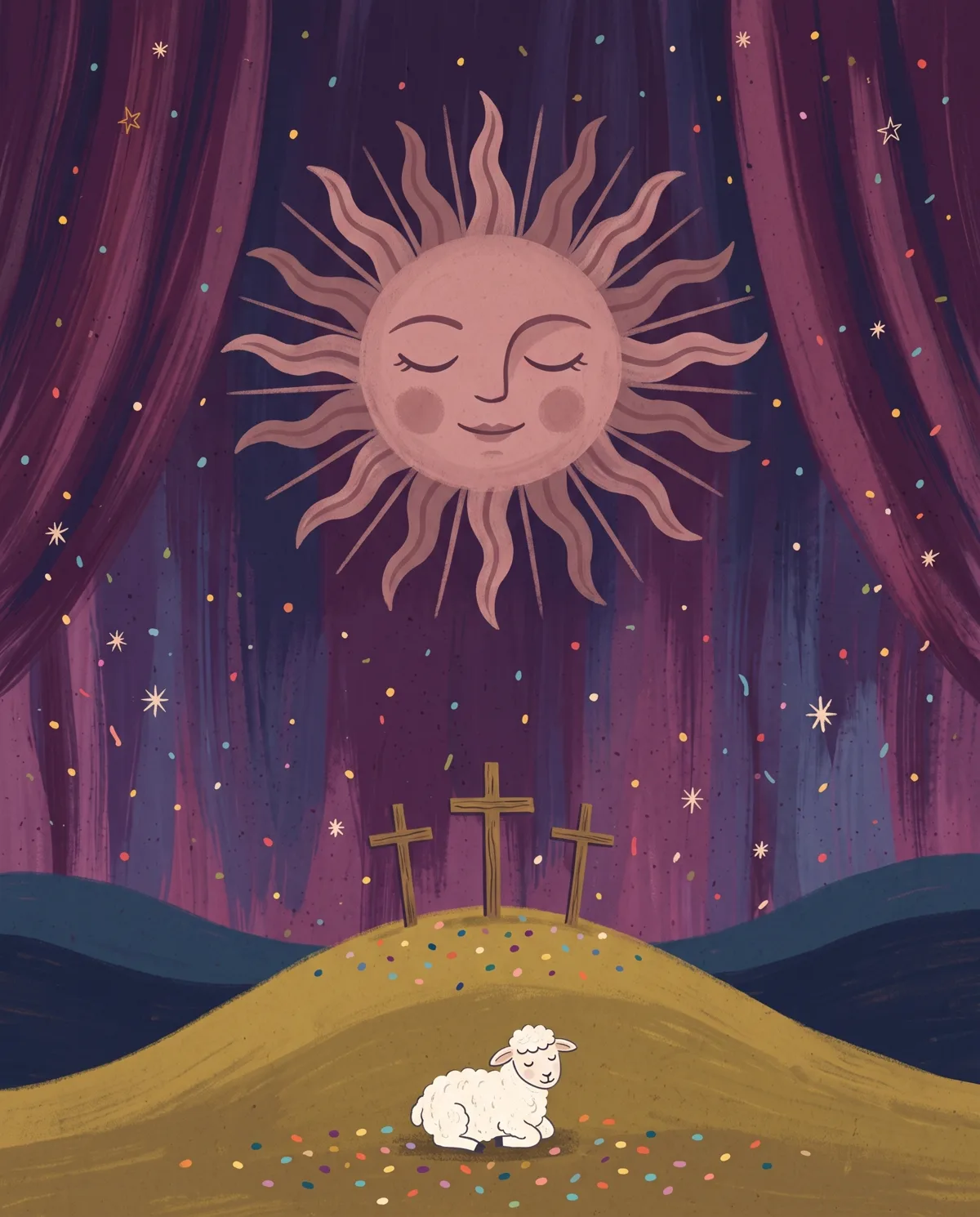
Covers: Jesus' parables, miracles, and teaching as he travels toward Jerusalem. Read the related prophetic passages alongside the Gospel accounts.

Three small crosses on a hill under a plum curtain sky, the sun with its eyes closed, a single lamb below.
Chapter six

Holy Week

Palm Sunday to Holy Saturday

"He humbled himself by becoming obedient to death, even death on a cross." Philippians 2:8

Covers: The events of Jesus' final week across the four Gospels. Follow them day by day, with short readings and time for questions.

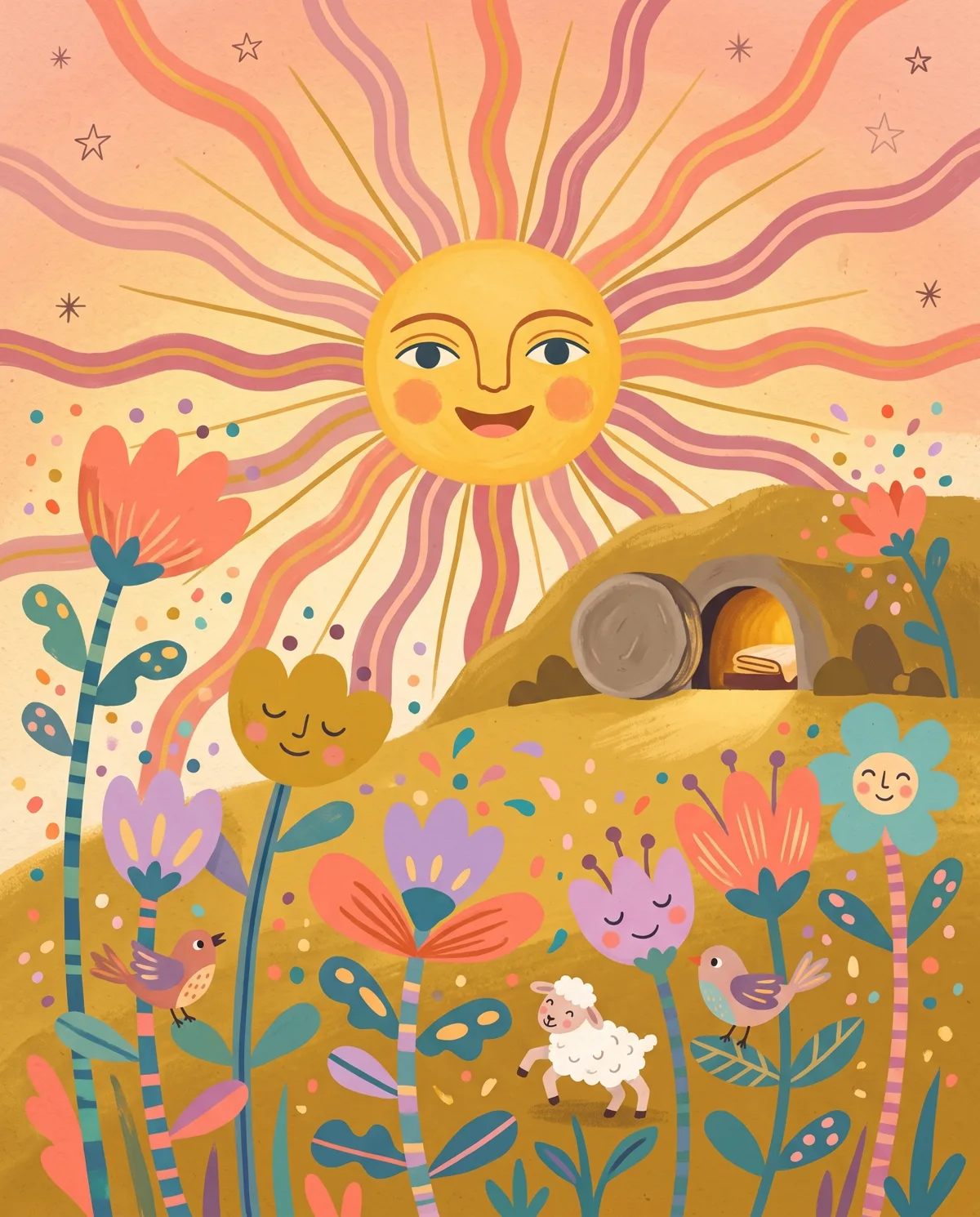
The sun wide awake with a joyful face over an empty tomb in a garden of smiling flowers.
Chapter seven

Eastertide

Easter to Pentecost, 50 days

"He is not here; he has risen!" Luke 24:6

Covers: Jesus' resurrection appearances and Acts 1 to 12. Read how his followers respond and how the early church begins.

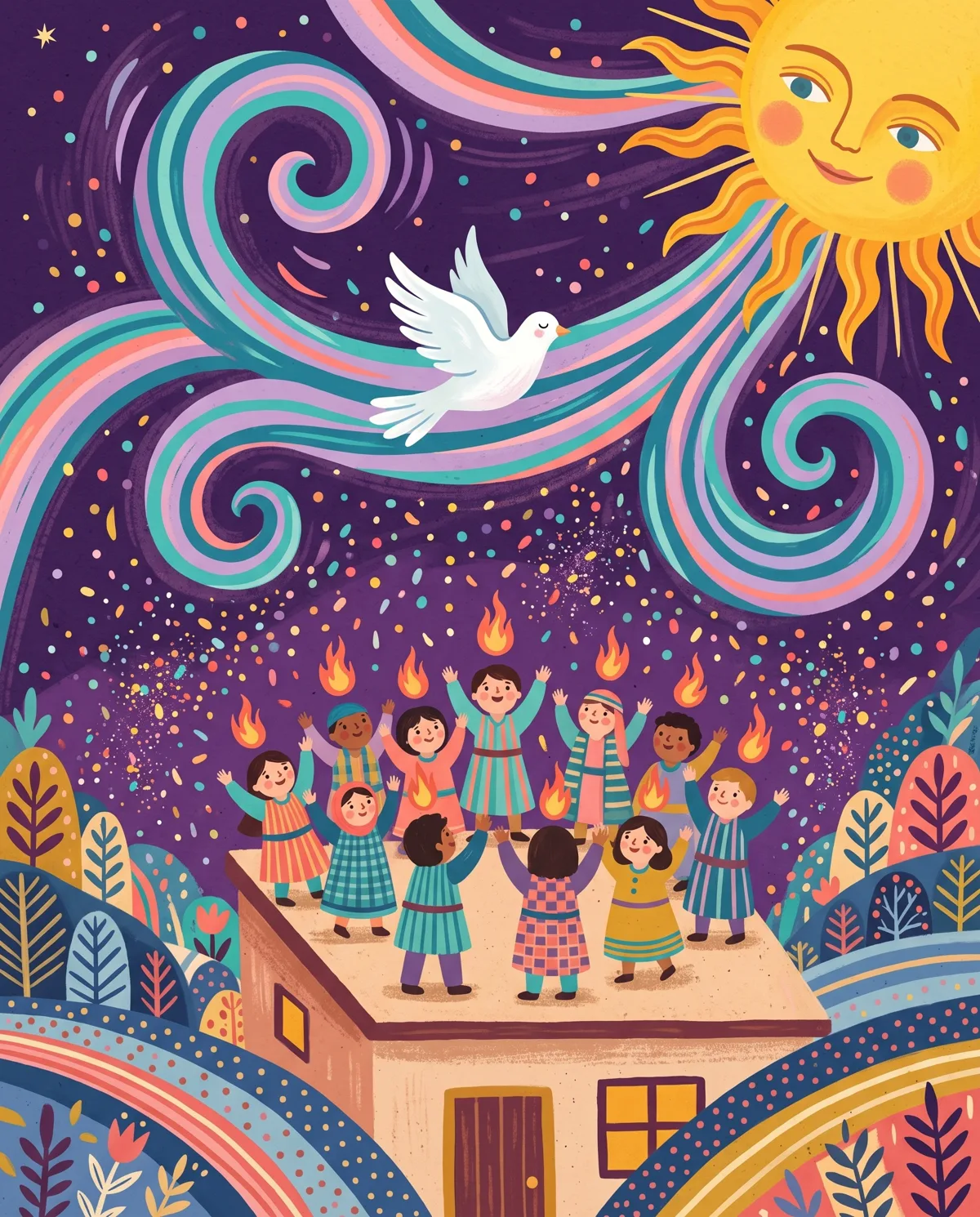
A rooftop crowd with small flames over their heads under swirling ribbon wind and a dove.
Chapter eight

Pentecost & the Long Green Weeks

50 days after Easter to late Nov

"I will pour out my Spirit on all people." Acts 2:17

Covers: Acts 13 to 28 and the letters from Romans through Jude. Continue the Psalms and wisdom readings. Finish with Revelation before Advent begins again.

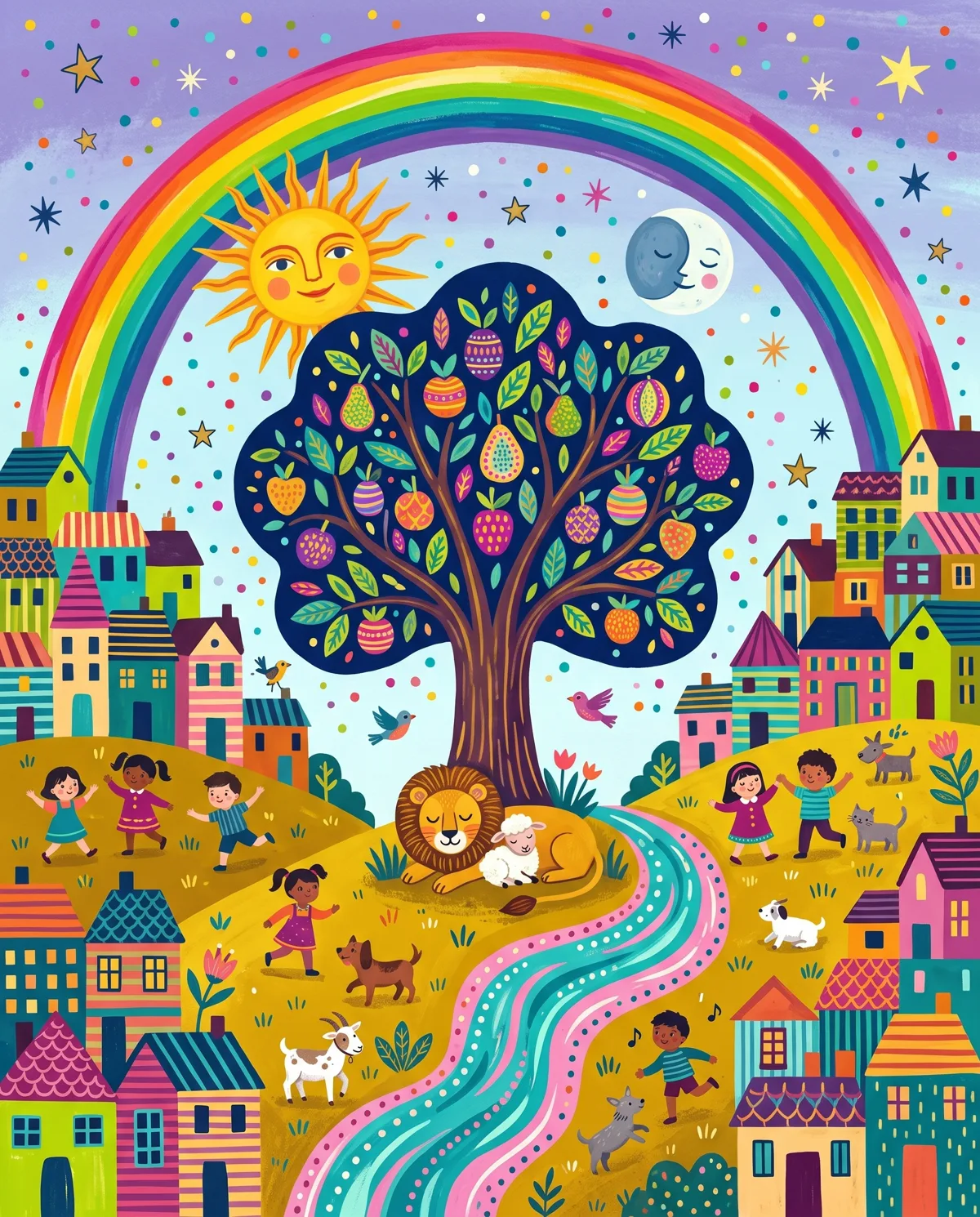
A joyful city of striped houses around a tree of life, a lion and lamb napping at its roots, sun and moon sharing the sky under a rainbow.
The last word

All Things New

Late Nov, just before Advent

"Behold, I am making all things new." Revelation 21:5

Finish the year with God's promise to make all things new. Read about the end of tears, death, and night. The next season begins with Advent.

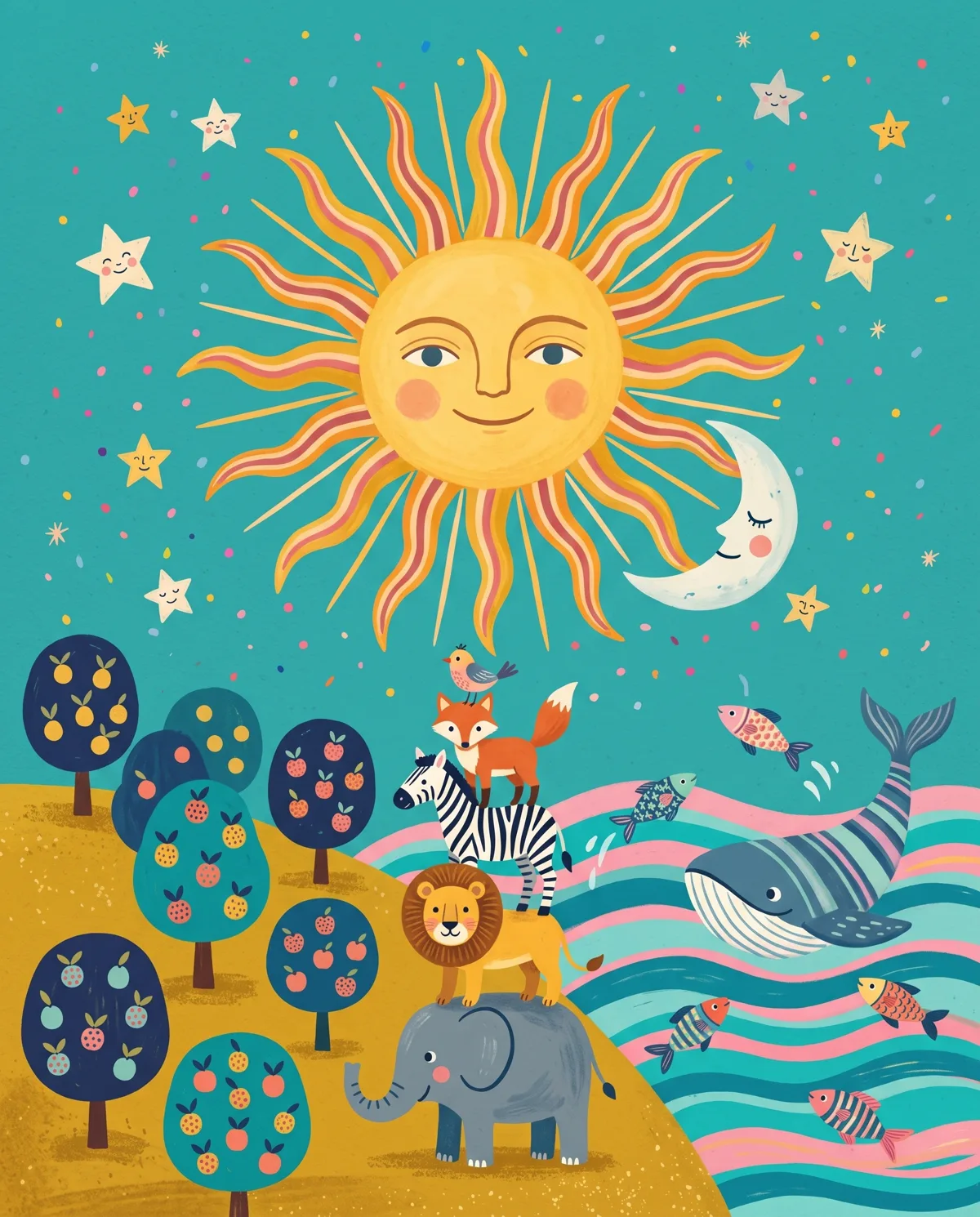
A smiling sun and sleepy moon over a brand-new world of blob-trees, striped seas and a totem stack of animals.
Creation. Read it at the start of the year or when your child asks for it.
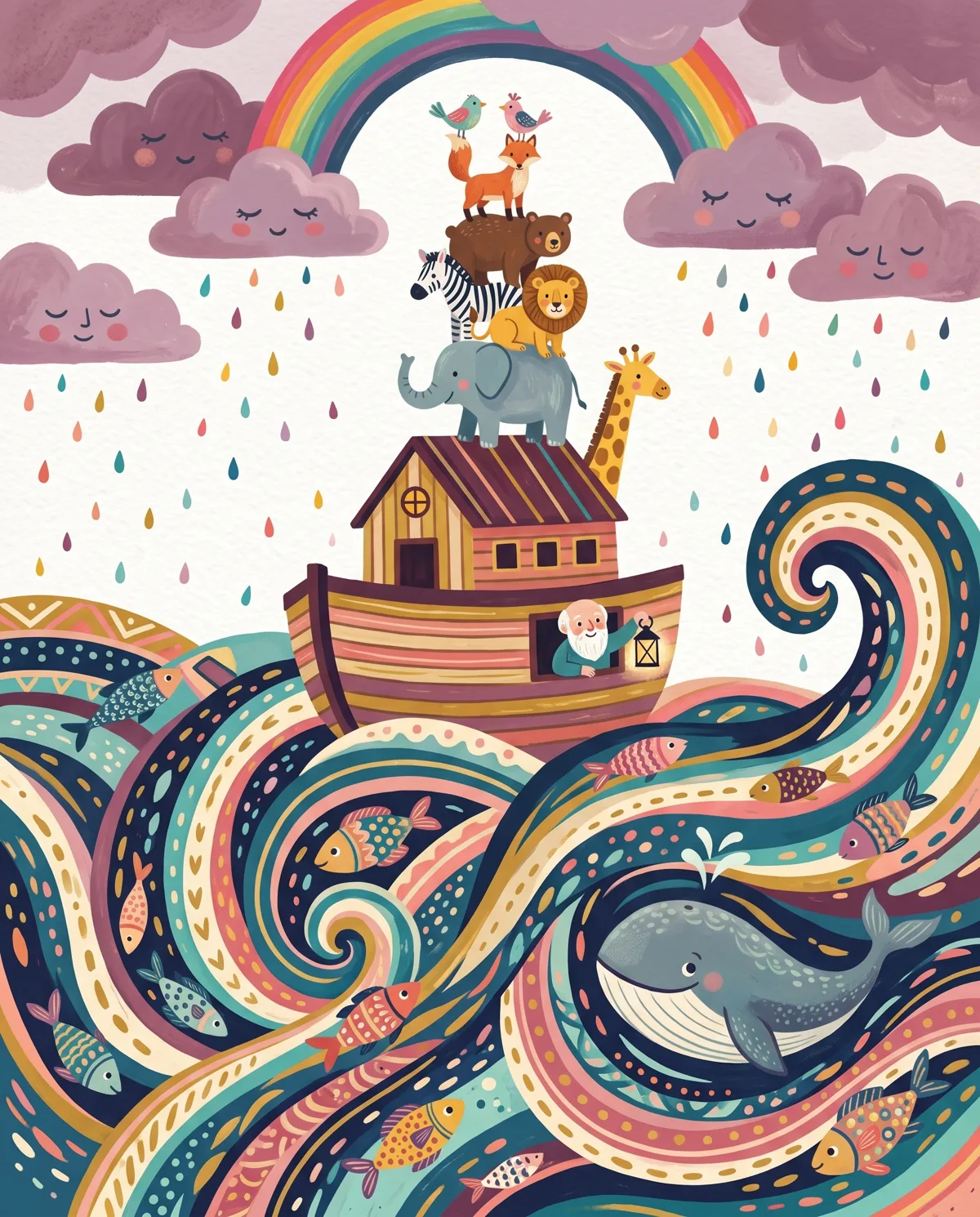
A striped ark piled with a tower of animals rides swirling ribbon waves under a rainbow breaking through.
Noah's Ark. Read it during the prelude and return to it when your child asks.
The framework

Growing in faith

Keep the chapter sequence. Adjust the reading and each child's part in it. They may listen, point, act out a story, read with you, or read independently. The detailed Year One plan starts in Band 01. Choose another band if its activities fit your child better.

00
Birth to 18 mo
Fowler: Undifferentiated Faith

Sing, read aloud, and use a short bedtime blessing. Hold and respond to your baby. There are no lessons to complete in this band.

01
18 mo to 3 yrs
Intuitive-Projective Begins Year One begins here

Read roughly 12 to 16 key stories from a picture-book Bible, such as The Jesus Storybook Bible. Repeat them across the seasons. The Year One page lists the books, weekly readings, songs, and refrains for this band.

02
3 to 6 yrs
Cavalletti's "Sweet Spot"

Read three to five stories per chapter from a fuller storybook Bible. Offer felt figures or simple props for retelling. Ask an open question, such as "I wonder what they felt," and listen to the response.

03
6 to 9 yrs
Bridge Into Concrete Reasoning

Read short passages from a simplified Bible translation alongside the storybook. Follow the same chapters. Invite your child to read a refrain or a few lines aloud.

04
9 to 13 yrs
Structured Doctrine Becomes Usable

Use a one-year chronological reading plan organized around the seasons. Read one of the 52 questions in The New City Catechism for Kids each week. Discuss difficult passages in context, using Tennison's teaching as a reference.

05
13+ yrs
Formal Reasoning, Faith Becoming Their Own

Your teenager manages a one-year plan to read the full Bible, including every letter and wisdom book. Discuss genre, historical context, questions about faith, and work and calling. Tennison's "Four Greats" teaching is a reference for that last topic.

Building it out in full

Year one, month by month

This first-year plan is for families starting in Band 01, around 18 months to three years. It follows selected stories through the church year. The dates below belong to this edition.

Now to Nov 28, 2026Ordinary Time

Set a regular reading time. Before Advent, choose a bedtime slot, use the same short prayer, and rotate five to eight picture books.

Nov 29 to Dec 24Advent

Read about creation and the promise of a rescuer. Light one candle each Sunday and add one figure to the manger scene. Refrain: "We are waiting for Jesus."

Dec 25 to Jan 5Christmastide

Read the same nativity pages each night for twelve days. Let your child point to familiar people and animals.

Jan 6 to Feb 9Epiphany

Read about Moses and the sea. Say: "God's people were stuck, and God made a way through."

Feb 10 to Mar 27Lent

Introduce the empty tomb with this sentence: "Jesus died, and then he was alive again." Continue reading the familiar stories from your basket.

Mar 21 to 27Holy Week

Wave a palm branch or leaf on Sunday. Keep Saturday quiet. Use the Holy Week objects to help your child follow the week's events.

Mar 28 to May 15Eastertide

Repeat "He is risen" and leave time for your child to respond. Notice when they begin to use the words on their own.

May 16Pentecost

Tell your child that God's Spirit is with them.

May 17 to Nov 27Ordinary Time

Ask what your child wonders about familiar stories. Notice when they retell a story through words, gestures, or play. Use those observations to decide whether to try Band 02's props and additional readings.

Nov 28, 2027Advent again

Begin Advent again with the same four key stories and candle ritual. Invite your child to switch on the flameless candle.

Use the week-by-week page for daily reading. Each Sunday has a story, refrain, song, and activity. The page also includes the book list, supplies, and five printable sheets.

Open the week-by-week plan →

Sources & further reading

The shelf this is built on

On how children grow in faith

James Fowler. Stages of Faith
Fowler's framework informs the age bands. His early stages describe trust and learning through stories and images.
Sofia Cavalletti. The Religious Potential of the Child
Cavalletti's observations of children aged three to six inform the use of scripture, materials, and reflection.
Jerome Berryman. Godly Play
A method of biblical storytelling using objects and open questions.
Edutopia / fMRI storytelling research
Research comparing how preschoolers respond to audio, illustrated, and animated stories. The study supports the use of illustrated read-alouds without establishing a rule for every child.

On completing the whole Bible every year

Alabaster Co.. A Beautiful Year with Jesus
A 365-day devotional for adults. A reference for regular reading over a year.
Chronological family Bible-in-a-year plans (e.g. The Bible in 52 Weeks for Families)
Examples of organizing family Bible reading by week across a year.

On structuring the content itself

Deuteronomy 6:4 to 9 (the Shema)
Instructions to speak about God's words during daily family life.
Marty Machowski. Long Story Short and Old Story New
Family devotionals arranged in biblical order. Used in Band 03 alongside readings from the Bible.
The New City Catechism for Kids
52 questions and answers. Read one each week in Band 04.
"A Catechism for Young Children" (19th-century tradition)
Short questions and answers about faith, beginning with "Who made you?"

On Dr. Allen Tennison specifically

"The Old Testament's Relevance for Today". Bridging the Gap podcast
Teaching on reading the Bible's earlier books in full and in context.
"The Four Greats: A Theology of Work". The Stone Table
Teaching on work and calling, used in Band 05.
"Does the Bible Endorse Slavery?" and "The Theology of the Cross". With Rich Wilkerson Jr.
Conversations about slavery and the cross. References for discussing difficult biblical passages.

On the look of this site

The paintings
Twelve illustrations with patterned seas, stars, animals, and plants. Their colors inform the page design. The typography draws on printed storybooks.
One ritual for you

Tending it, year to year

Set aside fifteen minutes on the Saturday before Advent each year. Review the plan and decide whether each child is ready for another band. Update the dates, readings, and activities for the coming year. Keep the chapter sequence.

The Tending page explains the review. Use its checklist, readiness observations, calendar through 2040, and Year Two outline. Record your decisions on the one-page log.

Open the Tending page →